
AI Girls: Leading No-Cost Apps, Lifelike Chat, and Safety Tips 2026
We present the practical guide to 2026’s “AI girls” landscape: what’s actually zero-cost, the way realistic conversation has advanced, and methods to remain safe while navigating AI-powered deepnude apps, online nude creators, and adult AI applications. One will get an insightful pragmatic examination at the market, quality benchmarks, and a ethics-focused safety playbook you can implement immediately.
The term quotation mark AI girls” covers 3 different application types that commonly get mixed up: digital chat friends that replicate a girlfriend persona, explicit image synthesizers that generate bodies, and artificial intelligence undress apps that try clothing elimination on real photos. All category presents different expenses, realism boundaries, and risk profiles, and confusing them up represents where many users get hurt.
Defining “AI girls” in this year
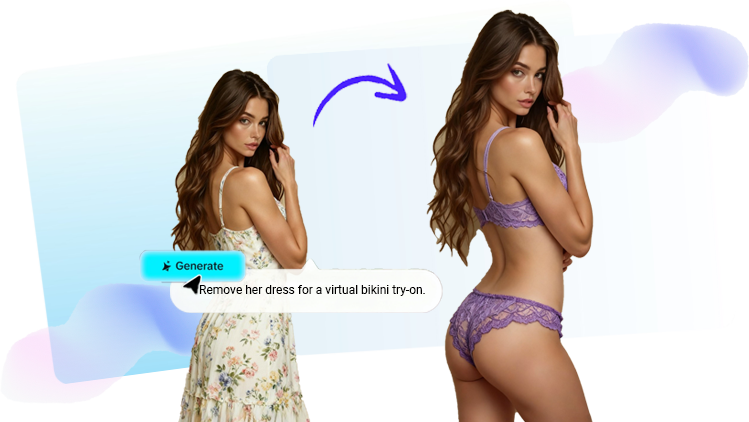
Virtual girls now fall into 3 clear categories: companion conversation apps, mature image creators, and garment removal tools. Companion chat concentrates on character, recall, and speech; graphic generators aim for realistic nude creation; clothing removal apps seek to estimate bodies beneath clothes.
Chat chat applications are the least juridically risky because these platforms create artificial personas and fictional, synthetic material, often gated by explicit policies and community rules. NSFW image generators can be more secure if utilized with fully synthetic prompts or virtual personas, but such platforms still present platform regulation and privacy handling concerns. Nude generation or “Deepnude”-style programs are considered the riskiest type because these applications can be misused for illegal deepfake material, and numerous jurisdictions currently treat such actions as an illegal criminal offense. Framing your objective clearly—companionship chat, computer-generated fantasy images, or authenticity tests—establishes which approach is suitable and what level of much protection friction you must tolerate.
Market map plus key vendors
The industry splits by purpose and by methods through which the products are produced. Platforms like N8ked, DrawNudes, UndressBaby, AINudez, Nudiva, and PornGen are promoted as AI nude generators, online nude tools, or intelligent undress applications; their key points tend to center around realism, speed, expense per image, and privacy promises. Interactive chat platforms, by contrast, compete on dialogue depth, latency, retention, and voice quality rather than concerning visual output.
Given that adult automated tools are volatile, judge vendors nudiva app by provided documentation, not their promotional content. At minimum, scan for a clear explicit consent policy that bans non-consensual or minor content, a clear data retention statement, some way to erase uploads and created content, and transparent pricing for tokens, subscriptions, or platform use. When an clothing removal app features watermark elimination, “zero logs,” or “able to bypass content filters,” view that equivalent to a red flag: responsible providers refuse to encourage deepfake misuse or rule evasion. Always verify integrated safety measures before you upload material that may identify some real subject.
What AI virtual partner apps are actually free?
Many “free” options are freemium: one will get certain limited quantity of outputs or interactions, promotional materials, branding, or restricted speed until you subscribe. Any truly complimentary experience usually means inferior resolution, queue delays, or strict guardrails.
Assume companion conversation apps to provide a small daily allotment of messages or tokens, with explicit toggles frequently locked under paid premium tiers. NSFW image generators typically offer a few of lower resolution credits; upgraded tiers enable higher resolutions, quicker queues, personal galleries, and personalized model slots. Nude generation apps seldom stay complimentary for extended periods because processing costs are high; such tools often move to per-render credits. When you want zero-cost experimentation, consider offline, open-source systems for communication and non-explicit image evaluation, but avoid sideloaded “clothing removal” programs from untrusted sources—they’re a typical malware attack route.
Comparison table: choosing the appropriate category
Pick your platform class by coordinating your objective with any risk you’re willing to accept and the consent you can obtain. Our table following outlines what features you usually get, what expenses it involves, and when the pitfalls are.
| Classification | Standard pricing approach | Content the free tier provides | Primary risks | Ideal for | Authorization feasibility | Privacy exposure |
|---|---|---|---|---|---|---|
| Chat chat (“Digital girlfriend”) | Freemium messages; monthly subs; additional voice | Restricted daily conversations; basic voice; NSFW often locked | Over-sharing personal details; parasocial dependency | Character roleplay, relationship simulation | Excellent (artificial personas, without real individuals) | Medium (communication logs; review retention) |
| Mature image synthesizers | Tokens for generations; premium tiers for quality/private | Basic quality trial credits; branding; wait limits | Policy violations; leaked galleries if without private | Artificial NSFW content, artistic bodies | Good if fully synthetic; secure explicit authorization if utilizing references | Medium-High (uploads, prompts, results stored) |
| Undress / “Apparel Removal Application” | Per-render credits; limited legit free tiers | Infrequent single-use trials; heavy watermarks | Unauthorized deepfake risk; viruses in suspicious apps | Research curiosity in supervised, authorized tests | Low unless all subjects clearly consent and have been verified adults | Extreme (identity images uploaded; serious privacy risks) |
How authentic is chat with AI girls now?
State-of-the-art companion chat is remarkably convincing when providers combine powerful LLMs, brief memory buffers, and identity grounding with dynamic TTS and reduced latency. The flaw shows under pressure: extended conversations wander, guidelines wobble, and emotional continuity falters if recall is limited or safety measures are variable.
Authenticity hinges upon four key elements: latency under two seconds to preserve turn-taking smooth; persona cards with reliable backstories and parameters; speech models that carry timbre, rhythm, and respiratory cues; and recall policies that retain important details without storing everything you say. For safer experiences, explicitly set limits in the first messages, refrain from sharing identifiers, and prefer providers that offer on-device or complete encrypted voice where offered. Should a conversation tool advertises itself as a fully “uncensored companion” but can’t show how it protects your logs or enforces consent norms, move on.
Assessing “authentic nude” content quality
Excellence in some realistic adult generator is not primarily about marketing and primarily about anatomical accuracy, illumination, and coherence across positions. Today’s best AI-powered models manage skin fine detail, joint articulation, finger and foot fidelity, and fabric-to-skin transitions without seam artifacts.
Undress pipelines often to fail on occlusions like crossed arms, layered clothing, accessories, or hair—watch for warped jewelry, inconsistent tan marks, or lighting effects that fail to reconcile with an original picture. Fully artificial generators fare better in artistic scenarios but may still generate extra appendages or irregular eyes under extreme inputs. For authenticity tests, analyze outputs across multiple poses and illumination setups, enlarge to double percent for edge errors near the collarbone and hips, and examine reflections in mirrors or glossy surfaces. If any platform hides originals after upload or blocks you from removing them, that’s a clear deal-breaker independent of graphic quality.
Safety and authorization guardrails
Use only authorized, adult content and avoid uploading recognizable photos of genuine people except when you have explicit, written consent and a valid reason. Many jurisdictions pursue non-consensual deepfake nudes, and platforms ban AI undress utilization on genuine subjects without permission.
Embrace a ethics-centered norm also in private settings: obtain clear permission, store evidence, and maintain uploads de-identified when feasible. Don’t ever attempt “apparel removal” on images of familiar persons, well-known figures, or any person under legal age—questionable age images are prohibited. Reject any platform that promises to bypass safety protections or remove watermarks; these signals connect with policy violations and increased breach danger. Finally, remember that intention doesn’t eliminate harm: creating a non-consensual deepfake, even if you never distribute it, can still violate laws or policies of platform agreement and can be devastating to the person shown.
Security checklist before using every undress app
Reduce risk by considering every undress app and online nude generator as some potential information sink. Choose providers that handle on-device or provide private settings with full encryption and direct deletion controls.
In advance of you upload: examine the data protection policy for storage windows and third-party processors; verify there’s a delete-my-data mechanism and available contact for removal; refrain from uploading faces or recognizable tattoos; strip EXIF from picture files locally; employ a temporary email and financial method; and isolate the app on a separate user profile. Should the platform requests photo roll rights, deny it and only share specific files. When you notice language like “may use submitted uploads to train our algorithms,” assume your data could be kept and work elsewhere or refuse to upload at all. Should you be in doubt, never not share any content you would not be okay with seeing exposed.
Detecting deepnude results and web-based nude generators
Identification is imperfect, but technical tells involve inconsistent shading, unnatural surface transitions at locations where clothing had been, hairlines that merge into skin, jewelry that melts into a body, and reflections that don’t match. Zoom in around straps, bands, and fingers—such “clothing removal tool” commonly struggles with transition conditions.
Look for fake uniform skin texture, recurring texture patterns, or blurring that tries to hide the boundary between generated and authentic regions. Check data tags for lacking or generic EXIF when an original would include device information, and perform reverse picture search to determine whether the facial features was lifted from another photo. Where available, verify content authenticity/Content Credentials; some platforms include provenance so users can identify what was edited and by whom. Use external detectors carefully—such systems yield erroneous positives and misses—but merge them with human review and source signals for stronger conclusions.
What ought you respond if one’s image is used non‑consensually?
Take action quickly: secure evidence, file reports, and use official takedown channels in parallel. One don’t require to prove who created the synthetic content to start removal.
First, record URLs, time information, page screenshots, and hashes of such images; preserve page source or archival snapshots. Then, flag the material through available platform’s fake profile, explicit material, or synthetic media policy reporting systems; several major websites now have specific unauthorized intimate content (NCII) systems. Next, submit a removal request to web search engines to limit discovery, and submit a DMCA takedown if someone own any original image that became manipulated. Fourth, reach out to local law enforcement or an available cybercrime team and give your proof log; in various regions, non-consensual imagery and synthetic content laws enable criminal or judicial remedies. Should you’re at risk of further targeting, explore a tracking service and consult with available digital security nonprofit or legal aid service experienced in non-consensual content cases.
Little‑known facts that merit knowing
Fact 1: Several platforms tag images with perceptual hashing, which helps them detect exact and near-duplicate uploads around the web even following crops or slight edits. Fact 2: The Content Authenticity Initiative’s authentication standard allows cryptographically signed “Content Credentials,” and a growing number of cameras, tools, and media platforms are implementing it for verification. Fact 3: Both Apple’s App Store and Android Play prohibit apps that facilitate non-consensual adult or adult exploitation, which is why numerous undress tools operate exclusively on the internet and away from mainstream marketplaces. Fact 4: Online providers and foundation model companies commonly prohibit using their platforms to produce or distribute non-consensual explicit imagery; if any site claims “uncensored, no rules,” it might be breaking upstream terms and at greater risk of immediate shutdown. Fact 5: Malware disguised as “nude generation” or “automated undress” installers is common; if a program isn’t web-based with transparent policies, treat downloadable binaries as hostile by assumption.
Summary take
Employ the right category for a specific right purpose: companion chat for roleplay experiences, adult image synthesis tools for synthetic NSFW content, and stay away from undress tools unless you have explicit, adult authorization and an appropriate controlled, secure workflow. “Zero-cost” generally means limited credits, markings, or inferior quality; paid tiers fund required GPU resources that enables realistic chat and images possible. Beyond all, regard privacy and permission as essential: limit uploads, secure down deletions, and step away from every app that hints at non-consensual misuse. Should you’re assessing vendors like such services, DrawNudes, various tools, AINudez, Nudiva, or related services, test solely with de-identified inputs, check retention and removal before one commit, and never use images of genuine people without clear permission. High-quality AI interactions are possible in the current era, but these are only worthwhile it if one can achieve them without crossing ethical or regulatory lines.
